The method
Recipes with a why.
Dr. Jorge Pérez-Calvo's method isn't a diet. It's a framework — four principles he learnt from the Eastern traditions — Chinese, Japanese and Ayurvedic — applied to the Western patient over four decades of practice. Each recipe in the catalogue carries the reasoning.
01 · Cooling vs warming
Yin / Yang energy
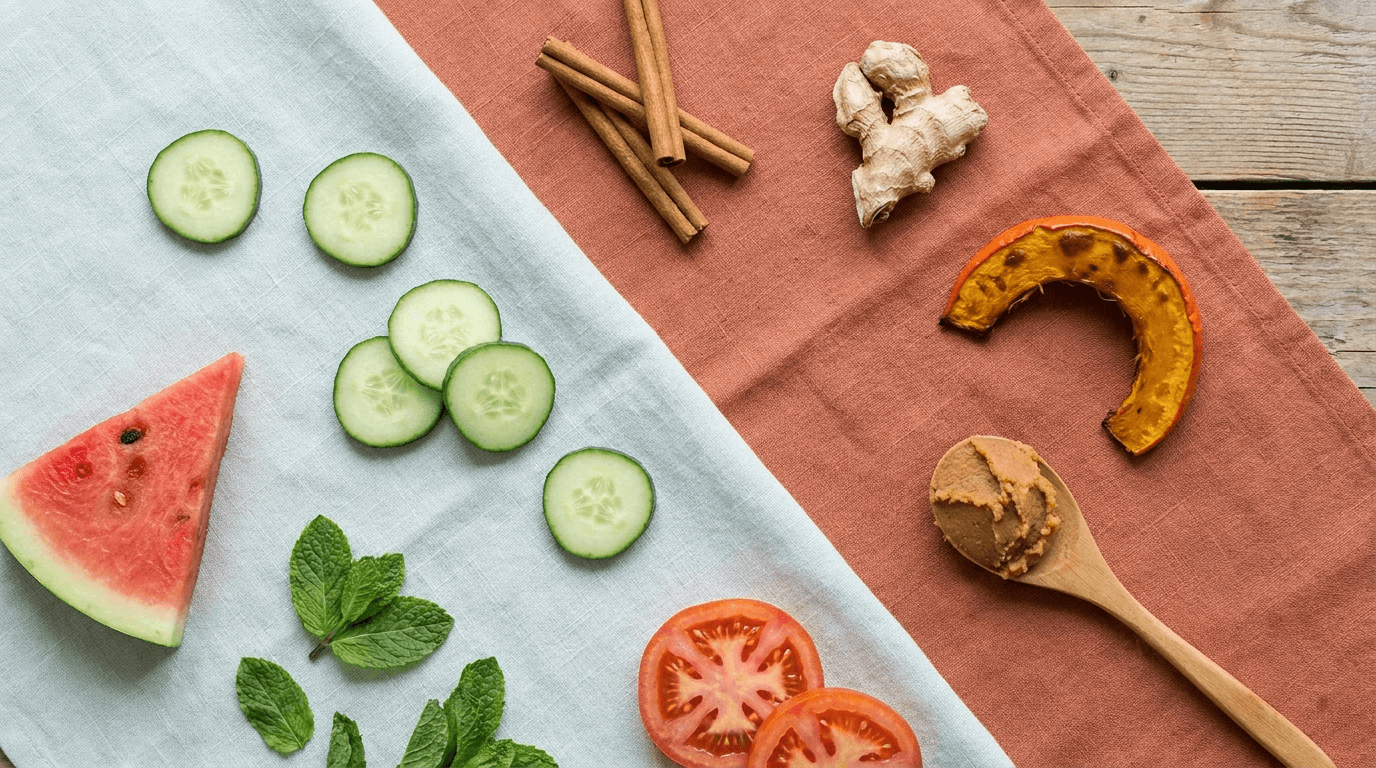
Some foods cool you down (yin), others warm you up (yang). The balance depends on your state, the season and what your body asks for. The Dr.'s method is built on this polarity — never on extremes.
02 · How food moves energy
Contractive / Expansive
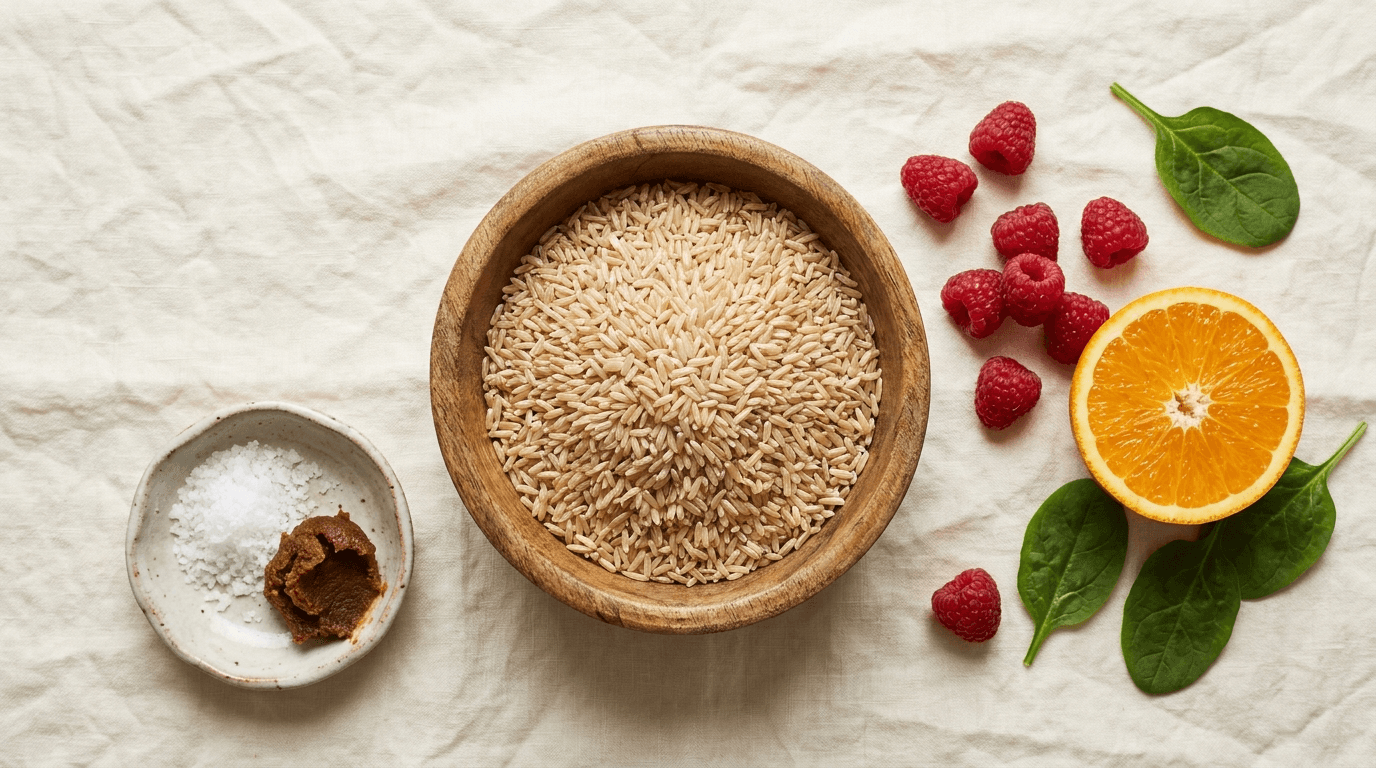
Salt, miso and root vegetables concentrate energy inward. Fruit, sugar and raw greens disperse it outward. Each meal balances the two — that's why every recipe has its 'why'.
03 · Sweet · sour · bitter · pungent · salty
The five tastes
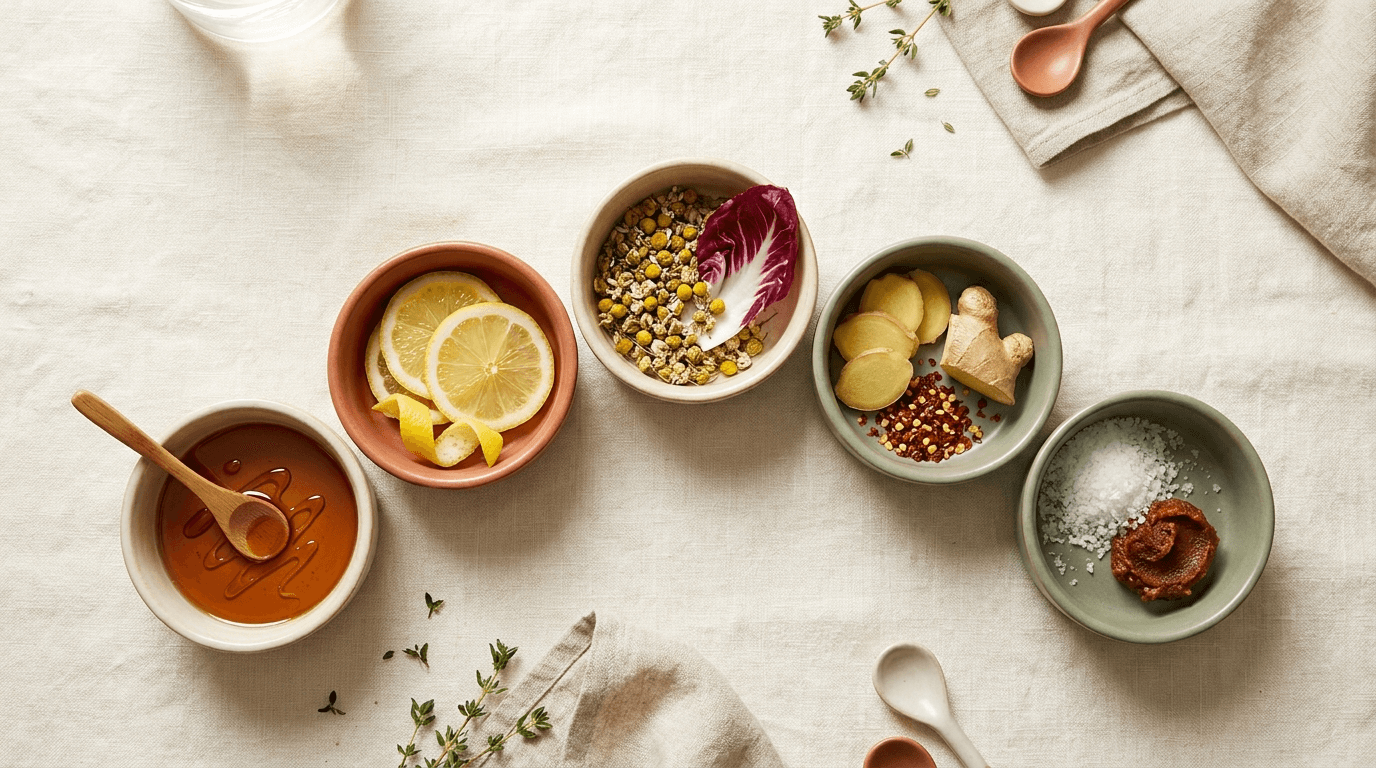
In the energy-nutrition tradition each taste is associated with a different organ: sour with the liver, salty with the kidneys, sweet with the spleen and pancreas, bitter with the heart, pungent with the lungs. A balanced day visits all five.
04 · Eat with the calendar
Seasonal alignment
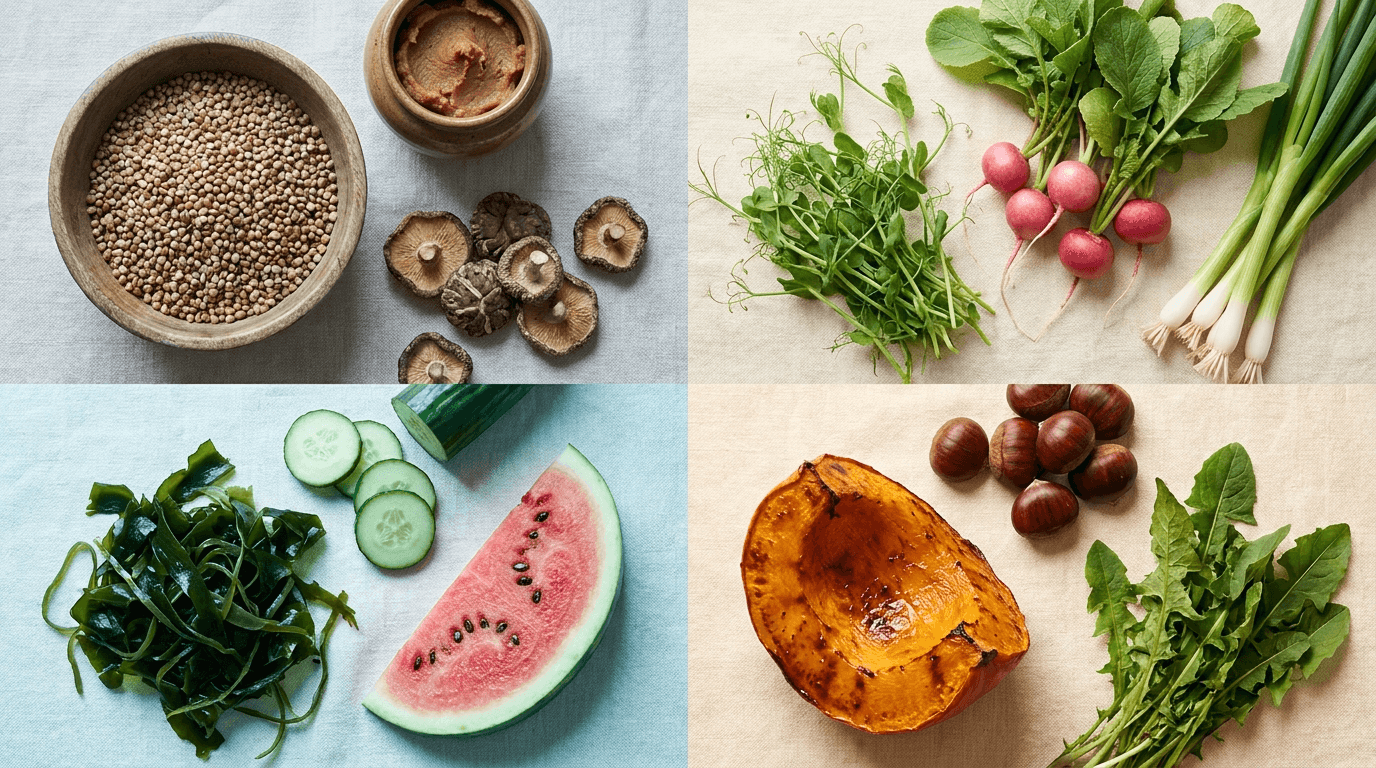
In this tradition buckwheat is a winter food, bitter greens belong to autumn and seaweed to summer — each season has its own register of warming or cooling dishes. The Dr.'s 'Bitácora' page tracks the theme of every month.
How it shows up
From principle to plate.
The four principles aren't theory you read once and forget. They appear in three concrete places when you use the platform:
On every recipe card
The energy fingerprint: 5 dots on the yin/yang scale + a coloured dot for the dominant taste. You learn the framework by osmosis, no glossary needed.
Browse catalogueIn the 16 protocols
Each protocol groups 6-10 recipes around a theme. The energy-and-rebuilding theme leans yang and warming, the liver theme leans sour, the pregnancy theme favours mineral-rich, building foods.
See protocolsIn the Dr.'s monthly journal
12 entries, one per month. Each one picks the seasonal theme — January warms the kidneys, May celebrates greens, December returns to deep miso.
Read the journal
Try the method